
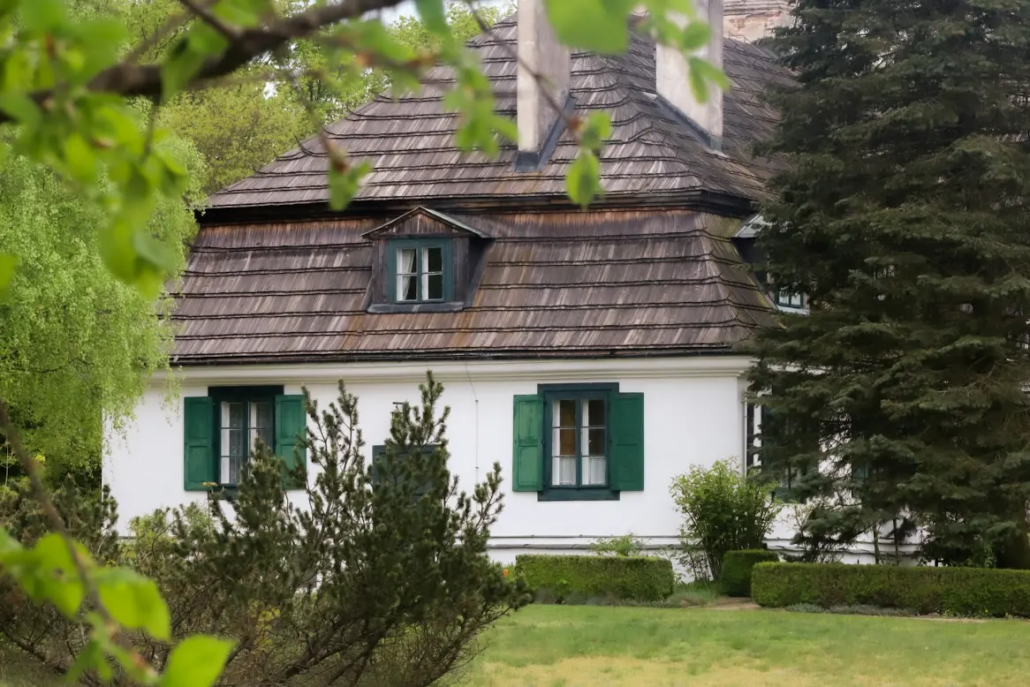
How to Inherit Property in Poland – Complete Guide for Foreigners
Inheriting a house after death of grandparents or parents is a common scenario — but what happens if the property is located in another country? Descendants of emigrants or spouses in international marriages may face a situation where they inherit a house in Poland. What to do with an inherited house in Poland if you live abroad? It is important to determine which law applies to the specific case, what documents need to be prepared, what costs and taxes may arise, and what decisions need to be made. Inheriting property in a will does not have to be a daunting process — proper preparation and knowledge of the procedures can make the process much smoother.
EU Regulation on Cross-Border Inheritance
In the European Union, Regulation No. 650/2012 standardizes property inheritance laws and estate rules in cross-border cases. This regulation introduced significant changes, eliminating many issues caused by conflicts between the legal systems of different countries. For foreigners inheriting property in Poland, this means much simpler procedures than a decade ago.
The key point is to determine which laws on property inheritance apply to a particular estate. The EU Regulation introduces a default rule — the law of the country where the deceased had their habitual residence at the time of death applies. This refers not to formal residency or citizenship, but to the deceased’s actual centre of life. For example, if a Polish citizen lived in Germany for the last years of their life, worked there, had friends, and handled daily matters there, German law would apply — even to a property located in Poland.
Exceptions arise when the deceased had clearly stronger ties to another country — in such cases, the court may apply the law of that country.
A will allows the choice of applicable law. The testator can specify that their estate should be governed by the law of the country of their citizenship. For example, a Polish citizen living in Canada for many years may state in their will that Polish law applies to their estate. Such a choice must be explicit and unambiguous.
Statutory and Testamentary Inheritance in Poland
How to inherit property in Poland? The legal system provides two main paths for inheritance. Statutory inheritance applies when the deceased did not leave a will, when the will is invalid, or when it covers only part of the estate. The law precisely defines the circle of eligible heirs and their shares. The first group of statutory heirs includes the deceased’s children and spouse — for example, in the case of property inherited from mother. They inherit in equal shares, with the spouse receiving at least one-fourth of the estate. If the deceased had no children, the inheritance passes to the spouse and parents — the spouse receives half, and the parents share the remaining half. Further circles include siblings, grandparents, and more distant relatives.
Testamentary inheritance allows the testator freedom in disposing of their estate. A will can designate any persons as heirs, regardless of kinship, assign specific items (legacies), impose obligations on heirs, or appoint an executor. This freedom has limits — close family members are protected by forced heirship (zachowek). Zachowek grants children, the spouse, and parents a compulsory share of the estate if they were omitted or received less than half of what they would have inherited under statutory rules. This entitlement can be enforced by claiming payment from the testamentary heirs. For minor children inheriting property from parents or persons permanently unable to work, zachowek equals two-thirds of the statutory share.
Step-by-Step Procedure House Inheritance After Death
Obtaining the death certificate
The first essential document in inheriting property (inheritance document for property) is the deceased’s death certificate. If the death occurred in Poland, the certificate is issued by the civil registry office (Urząd Stanu Cywilnego) corresponding to the place of death. For foreigners, it is particularly convenient to order a copy online via the gov.pl website or directly through the registry office’s electronic system. A proxy in Poland can also collect the document in person. If the death occurred abroad, the situation becomes slightly more complex. The foreign death certificate must be translated by a sworn translator, and in many cases, it also requires an apostille or legalization to be valid in Poland. Alternatively, it is possible to request the transcription of a foreign certificate into the Polish civil registry, in which case one receives a Polish document equivalent to the original.
Choosing Between Notarial and Court Procedures
A notarial procedure can be chosen when all heirs agree regarding the inheritance and the applicable estate inheritance law. It requires that there be no disputes about: the validity of the will, the circle of heirs, or the size of shares. Additionally, all parties must appear before the notary in person or be represented by a proxy with a specific power of attorney.
A court procedure is necessary when there are any ambiguities or conflicts. The court conducts a non-contentious procedure, gathering evidence and establishing facts. It may examine witnesses, request documents, and seek expert opinions. While the court procedure usually takes longer than a notarial procedure, it provides greater legal certainty and is mandatory in disputed cases.
For foreigners inheriting property in the form of land (inherited land property), the notarial procedure has a significant advantage — it concentrates all actions in one place and time. However, it requires coordination among all heirs and their simultaneous presence (or representation). The court procedure allows for greater flexibility but may require multiple visits to Poland or engaging a proxy for an extended period.
Gathering Documentation
The list of required documents depends on the specific situation, but some items are almost always necessary. These include the deceased’s death certificate, birth certificates of all heirs, the deceased’s marriage certificate (if married), and the will (if one exists). In cases of inheritance from previously deceased heirs, for example, property inherited from the father, their death certificates are also required.
For foreigners inheriting under a legal system other than Polish law, a certificate of inheritance issued by the competent authority in the relevant country may be required. This document confirms who is an heir under that legal system. Its absence can significantly prolong the process, as the Polish court or notary will need to determine the content of foreign law independently.
A land and mortgage register extract is essential for identifying the property in cases of house inheritance, with or without a mortgage (inheriting a house with a mortgage). It contains information on owners, area, encumbrances, and third-party rights. It can be obtained online through the ekw.ms.gov.pl portal for a fee of 20 PLN for a standard extract or 50 PLN for a full extract with a seal. For formal procedures, a full extract is recommended.
If a will exists, it must be presented in its original form. Wills made abroad require translation and legalization. Special attention should be paid to the form of the will — different countries have different formal requirements, and a will that is invalid under the applicable law will have no legal effect. In the case of property inherited through a will, it is advisable to check its validity with a lawyer before initiating the inheritance proceedings.
Filing an application or Appearing Before a Notary
An application for confirmation of inheritance is filed with the district court competent for the deceased’s last place of residence in Poland. If the deceased did not have a residence in Poland, jurisdiction is determined based on the location of the property. The application can be submitted in person, through a proxy, as stipulated by house inheritance law.
A notarial certificate of inheritance requires the personal appearance of all heirs before a notary. Representation through a proxy is possible, but the power of attorney must be granted in notarial or consular form and must include a special authorization to submit statements of acceptance or renunciation of the inheritance and to participate in the execution of the notarial act.
Participation in the Proceedings
The court procedure for confirmation of inheritance is non-contentious. The court conducts it ex officio, collecting evidence necessary to establish all relevant circumstances. Heirs are participants in the proceedings, not parties in the traditional sense, which means simplified procedures and less formal representation requirements.
The court may summon participants to hearings, request statements, or require submission of documents. Increasingly, hearings are conducted online, which is particularly convenient for those living abroad. E-hearings require appropriate technical equipment and a stable internet connection but eliminate the need to travel to Poland in person. This is a major convenience for many people inheriting a house from abroad.
A legal proxy can represent the heir in all procedural matters. In inheritance cases, the proxy may be a attorney, legal advisor, or another individual (e.g., a family member). The power of attorney for inheritance matters should include authorization to:
- Submit statements regarding acceptance or renunciation of the inheritance,
- Represent the heir before court and notary, and
- Undertake actions related to the inheritance property.
Obtaining the Court Decision or Notarial Certificate
Court proceedings conclude with a decision on confirmation of inheritance. This document contains the court’s findings regarding the heirs, their respective shares, and the estate composition. The decision becomes final after the deadline for filing an appeal has passed or, if an appeal was filed, after it is resolved by the appellate court.
A final court decision has the force of an official document and serves as the basis for making an entry in the land and mortgage register. The court issues it ex officio at the end of the proceedings. Heirs can receive copies of the decision in person at the court, by post (including to a foreign address).
A notarial certificate of inheritance has the same legal effect as a court decision. It also serves as the basis for entry in the land and mortgage register and can be used in other cases requiring confirmation of heir status.
Entry in the Land and Mortgage Register
The land and mortgage register is a public register that records real estate and the rights associated with it. Registering a new owner requires submitting an application together with the document forming the basis for the change — in the case of inheritance, this is either the court decision or the notarial certificate of inheritance.
The application can be submitted in person at the district court maintaining the register, by mail, or electronically via the portal ekw.ms.gov.pl. The fee for registration is 200 PLN, fixed regardless of the property value. This is another advantage of the Polish system compared to many other countries, where fees are often proportional to the transaction value. The application may be submitted by the heir or their legal proxy.
Once the entry is made, the heir becomes the officially registered owner – owning property in Poland after inheritance. The heir can freely manage the property — sell, mortgage, or rent it. The register enjoys the presumption of accuracy, providing legal security for transactions. For third parties, the information in the register serves as an official source regarding ownership and any encumbrances.
💬 Need Help?
Our law firm specialises in representing foreign clients in Polish inheritance matters, including zachowek claims. We handle cases remotely and provide full legal assistance in English.
Need assistance with inheritance in Poland?
Contact us for personalized legal support.
💻 Book an online consultation!
📬 Email: k.lewicka@lzw-law.com
📞 Phone / WhatsApp: +48 502 775 164

Inheritance property Rights
It is common for the estate to include property that was rented out at the time of the owner’s death. In the case of inheriting a house with a tenant, the new owner automatically assumes the lease in place of the deceased.
This means that the existing lease remains in force, and the heir cannot terminate it freely without observing the notice periods and conditions specified in the Polish Act on the Protection of Tenants’ Rights. If you decide to inherit a rental property from your parents (inheriting parents’ rental property), you must also be aware of the obligations related to declaring rental income for tax purposes with the Polish tax office. For individuals living abroad, managing such a property can be challenging, so it may be advisable to hire a professional property management company to handle tenant relations and the day-to-day maintenance of the property on your behalf.
Certified Translations
If you are asking, “Can I inherit property in Poland if I live abroad and I do not speak Polish?”, the answer is to rely on a trusted and experienced certified translator. All foreign-language documents must be submitted with a Polish translation prepared by a sworn translator listed by the Ministry of Justice. A translation made by someone not officially registered, even if fluent in both languages, has no legal validity. The list of certified translators is publicly available on the Ministry of Justice website. A sworn translator is responsible for the accuracy and fidelity of the translation.
It is advisable to plan translations in advance. Translators specializing in rarer languages may have long waiting lists. Standard processing time is a few business days, but urgent cases can often be handled expressly for an additional fee. Some translators also offer remote services — you can send scanned documents and receive the certified translation via courier.
Option to Renounce the Inheritance
If you inherited a home with a mortgage that exceeds its market value, and the estate contains no other assets capable of covering the debt, renouncing the inheritance can be a rational decision. Simple acceptance would require repaying the entire loan from your own funds.
However, even when inheriting a house with no mortgage, renunciation may still be considered. The physical condition of the property matters. A building requiring major renovations, with serious structural defects, encumbered with multiple third-party claims, or threatened with expropriation, may be more of a burden than an asset. The costs to restore it to a usable state could exceed its post-renovation market value, making inheritance financially unwise.
Many people also wonder whether inheriting a house affects benefits or tax obligations. Receiving a significant inheritance may substantially impact eligibility for income-based benefits. In such cases, it is crucial to carefully analyse your situation and decide whether accepting the inheritance is the best choice. This issue can also be considered in advance when the property owner is drafting a will.
Inheriting a house in Poland as a foreigner is a multi-stage process that requires knowledge of the specific laws related to property inheritance. From understanding the legal foundations that determine the applicable law, through gathering and legalizing documents, choosing the form of probate proceedings, to the final decisions regarding acceptance or renunciation of the inheritance—each stage demands diligence and informed action.
Despite its initial complexity, many foreigners successfully complete the property inheritance process in Poland each year. With proper preparation, systematic action, and professional support, inheritance becomes a manageable process. The most important things are not to postpone formalities, act within the prescribed deadlines, and not hesitate to seek help when questions arise.

